
How to Choose the Best Writing Service for Your Academic Needs: A Student's Practical Guide
Finding a reliable academic writing service feels straightforward until you're staring at dozens of nearly identical websites, each promising "top-quality work" and "100% plagiarism-free" papers. The reality is messier. Some services deliver exactly what they promise; others vanish after taking payment, or send back work that reads like it was translated three times through a broken algorithm. Knowing how to tell them apart before you hand over your money — and your deadline — is the skill this guide is designed to give you.
Why Choosing the Right Writing Service Matters
A poor choice doesn't just waste money — it can damage your academic standing in ways that take semesters to recover from. Submitting plagiarized content, missing a submission window because a service failed to deliver, or receiving work that misses the assignment brief entirely are all real consequences of rushing this decision.
The financial stakes are real too. Academic writing services range from under $10 per page to well over $50, and price alone tells you almost nothing about quality. A student who pays $15 for a paper that gets flagged for plagiarism has lost both the money and the grade. One who pays $40 for a paper that requires three rounds of revision before it's usable has also lost something valuable: time.
There are entirely legitimate reasons to use these services. ESL students often need editing support to ensure their ideas are communicated clearly in English. Students managing work, family, and study simultaneously sometimes need a reference document to understand how a well-structured argument looks in their discipline. None of that requires ignoring the question of quality — it makes it more important.
Key Criteria to Evaluate Before You Commit
The most reliable way to evaluate an academic writing service is to apply the same criteria to every option, rather than making gut-feel decisions based on website design. Here's the framework that matters:
- Writer qualifications: Does the service verify academic credentials, or hire anyone who applies?
- Plagiarism-free guarantee: Is it backed by a verifiable plagiarism report (Turnitin, Copyscape), or just a marketing claim?
- Deadline reliability: What's the service's track record for on-time delivery, especially for urgent orders?
- Pricing transparency: Is the quoted price the final price, or do add-ons (plagiarism report, formatting, preferred writer) inflate it significantly?
- Revision policy: How many revisions are included, within what timeframe, and what counts as a valid revision request?
- Customer support responsiveness: Can you reach a real person quickly if something goes wrong?
No single criterion is decisive on its own. A service with excellent writer qualifications but a vague revision policy is still a risk. Evaluate all six before making a commitment.
How to Assess Writer Quality and Subject Expertise
Writer quality is the single most variable factor across academic writing services, and it's the hardest to verify from the outside. The best services hire writers with verified degrees in specific disciplines — a biochemistry paper should go to someone with a graduate-level background in biochemistry, not a generalist content writer.
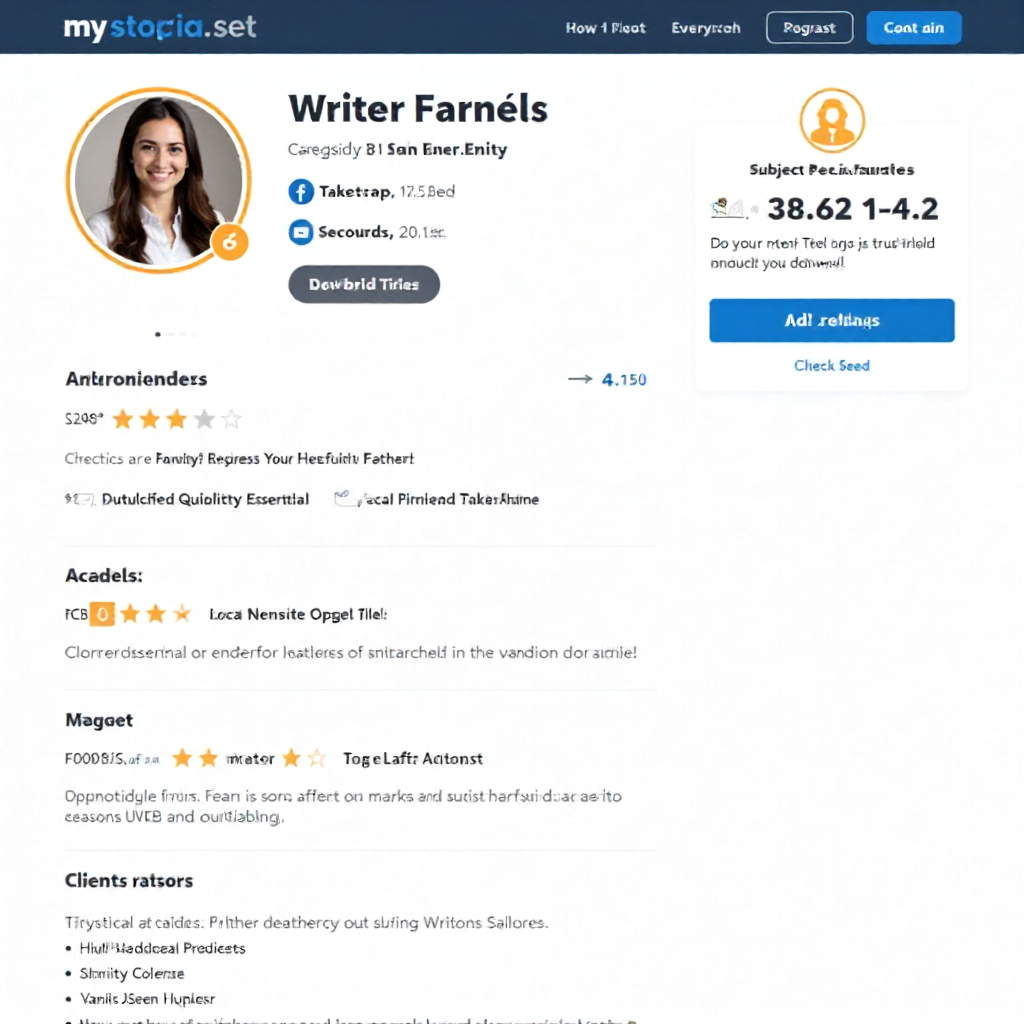
Look for services that let you review a writer's profile before assigning your order. Profiles should include academic background, areas of specialization, completed order count, and a client satisfaction rating. If a service offers no writer information whatsoever, that's a meaningful gap.
Some services offer sample papers by subject area. These are worth reading critically — not just for grammar, but for whether the writing demonstrates genuine understanding of the field. A literature review that lists sources without synthesizing them, or an analysis section that restates the prompt rather than answering it, signals a writer who's producing volume rather than quality.
If the service allows direct communication with writers before ordering, use it. Ask a specific question about your topic. A writer with real subject-matter expertise will give you a substantive answer. A generalist will give you something vague and reassuring.
Understanding Pricing, Policies, and Hidden Costs
Transparent pricing means the quoted price reflects what you'll actually pay — and many services fall short of this standard. A base price of $12 per page can climb to $22 once you add a plagiarism report, select a writer with a higher rating, and pay for same-day delivery. None of those add-ons are unreasonable, but you deserve to know about them upfront.
When comparing services, build the same order on each platform: identical page count, academic level, deadline, and required extras. Compare the final checkout totals, not the advertised starting prices.
The revision policy deserves particular attention. A generous-sounding "unlimited revisions" guarantee can be nearly worthless if it only applies within 48 hours of delivery, or if the service defines revision narrowly (grammar corrections only, no structural changes). Read the terms before you order, not after you receive work that needs significant changes.
A money-back guarantee is only as good as the conditions attached to it. Check whether refunds are offered for late delivery, for work that fails a plagiarism check, or for papers that don't match the original instructions. Services that bury these conditions in fine print, or that make the refund process deliberately complicated, are telling you something important about how they handle disputes.
Red Flags That Signal an Unreliable Service
Some warning signs are obvious in retrospect but easy to miss when you're under deadline pressure. Train yourself to spot them before you pay.
- No verifiable contact information. A legitimate business has a physical address, a working phone number, or at minimum a responsive email. A contact form that goes nowhere is a red flag.
- Prices that seem too low to be sustainable. A $5-per-page essay from a "qualified academic writer" is not a bargain — it's a signal that something is wrong with the business model.
- Vague or absent plagiarism guarantees. "We guarantee original work" without any mention of how that's verified is a marketing phrase, not a policy.
- No information about writer qualifications. If the website can't tell you anything about who's writing your paper, assume the worst.
- Aggressive upselling during checkout. Services that pile on fees for basic features (like receiving your paper in Word format) are optimizing for revenue, not customer satisfaction.
- Customer support that disappears after payment. Test support responsiveness before ordering — send a question and note how long it takes to get a useful response.
Privacy and data security matter here too. Academic writing involves sharing personal information, assignment details, and sometimes institutional login credentials. Check whether the service has a clear privacy policy and whether it commits to not sharing or reselling your data.
How to Use Reviews and Community Feedback Effectively
Customer reviews are useful, but only if you know how to read them. Fake testimonials are common in this industry — services sometimes generate five-star reviews in bulk, making their rating look authoritative when it isn't.
The most reliable sources of genuine feedback are independent review platforms (where services can't easily delete negative comments), student forums, and Reddit communities where students discuss their experiences candidly. Look for reviews that include specific details: the subject area, the academic level, the deadline, and what specifically worked or didn't. Generic praise like "great service, highly recommend" carries almost no information.
Pay attention to how services respond to negative reviews. A company that addresses complaints professionally, explains what went wrong, and offers a resolution is behaving like a legitimate business. One that responds defensively or not at all is showing you how it handles problems.
Volume matters, but so does recency. A service with 2,000 reviews from three years ago and nothing recent may have changed ownership or quality. Look for consistent feedback over time, not just an impressive total count. Resources like the FTC's endorsement guidelines can help you understand what legally constitutes a genuine review versus a paid or incentivized one.
Making Your Final Decision: A Quick Checklist
Before placing any order, run through this checklist. If you can't answer "yes" to most of these questions, keep looking.
- Does the service verify writer qualifications and show you writer profiles?
- Is a plagiarism-free guarantee backed by an actual report you'll receive?
- Is the final checkout price close to the advertised price, with no surprise fees?
- Does the revision policy give you enough time and flexibility to request meaningful changes?
- Is there a money-back guarantee with clearly stated, reasonable conditions?
- Have you found independent reviews — not just testimonials on the service's own website?
- Did customer support respond quickly and helpfully when you tested them?
- Does the service have a clear privacy policy that protects your data?
- Is the deadline you need something the service has a track record of meeting?
No service will be perfect across every dimension. The goal is to find one where the trade-offs are acceptable for your specific situation — your subject area, your deadline, your budget, and how much revision support you're likely to need.
Frequently Asked Questions
Is it legal to use an academic writing service?
In most countries, using a writing service is legal. The legal and ethical question is how you use the work — submitting a purchased paper as your own original work typically violates your institution's academic integrity policy, which is a separate matter from legality. Many students use these services for editing assistance, reference documents, or to understand how to structure arguments in their discipline, all of which are legitimate uses.
How can I tell if a writing service's reviews are genuine?
Look for reviews on independent platforms rather than the service's own website. Genuine reviews tend to include specific details about the order — subject, deadline, what worked and what didn't. A wall of five-star reviews with identical phrasing and no negative feedback is a strong indicator of manufactured testimonials.
What should I do if the delivered work doesn't meet my requirements?
Submit a revision request immediately, citing the specific ways the work doesn't match your original instructions. Document everything in writing. If the service fails to resolve the issue within the revision window, escalate to a refund request under the money-back guarantee. If that fails, consider disputing the charge with your payment provider.
How far in advance should I place an order to ensure quality?
For most academic work, placing an order at least 5-7 days before your deadline gives the writer enough time to research and draft properly, and leaves you time to review and request revisions if needed. Urgent orders (under 24 hours) are possible with most services but typically cost significantly more and carry higher quality risk.
Are cheaper writing services ever worth considering?
Occasionally, yes — but the risk-reward ratio is poor. Very low prices usually mean the service is cutting costs on writer quality, plagiarism checking, or customer support. If you're considering a budget option, test it with a low-stakes, short assignment first rather than risking a major paper. The savings rarely justify the potential consequences if the work is substandard.