Top Free Resources for Improving Your Writing Skills
Better writing comes from practice, informed revision, and feedback—not from one magic app. Free grammar checkers, writing guides, online courses, prompts, citation references, and peer review can each help with a different part of the process, whether you are polishing an essay or learning how to organize an argument.
The key is to choose resources that match the problem in front of you. A grammar checker may catch a typo, while a course can explain why a paragraph feels unfocused. Used together, free resources can build skills without replacing your own judgment or original work.
How to Choose the Right Writing Resource
Choose a writing resource by identifying your current goal, your skill level, and the kind of support you learn from best. A focused choice is more useful than collecting tools you rarely use.
Start by naming the challenge. If you often miss punctuation errors, try a grammar guide and a checker. If your essay lacks a clear argument, look for lessons on thesis statements and essay structure. For academic writing, prioritize resources on evidence, source use, and citation rules.
Then match the format to your learning style:
- Instant feedback: Grammar checkers and style tools flag possible issues as you draft.
- Step-by-step learning: Writing guides and online courses explain concepts with examples and exercises.
- Regular practice: Writing prompts give you a low-pressure way to build fluency.
- Reader perspective: Peer review can reveal confusing sections a tool may not understand.
Check whether a resource is genuinely free and what its limits are. Some tools restrict features or word counts, and courses may offer free lessons without a completion certificate. Choose one resource for learning and one for checking; that combination is usually easier to stick with than a crowded toolkit.
Free Tools for Grammar, Clarity, and Editing
Free grammar, clarity, and editing tools can identify possible errors and awkward sentences, but they cannot reliably judge every meaning or argument. Treat their suggestions as prompts to review, not instructions to accept automatically.
A grammar checker can flag spelling, punctuation, agreement, and commonly confused words. Style and clarity tools may point out long sentences, repeated words, passive constructions, or unnecessary complexity. These features are helpful during editing and proofreading, especially when you want to spot patterns in your own drafts.
Use a tool in two passes. First, review basic mechanics such as spelling and punctuation. Next, examine clarity suggestions by reading the sentence aloud and checking that the proposed edit keeps your meaning. A tool may misunderstand a technical term, a quotation, or a deliberate stylistic choice.
Keep these limits in mind:
- A clean error report does not prove that an essay has a strong thesis or sound evidence.
- Automated suggestions can change emphasis or introduce errors, so check every revision.
- Uploading coursework to an unfamiliar service may raise privacy concerns; review its data policies first.
Tools work best as a second set of eyes. For important academic writing, combine them with a careful reread or feedback from a person who understands the assignment.
Guides and Courses for Stronger Writing
Writing guides and free online courses help you learn the principles behind grammar, style, essay structure, and academic writing. They are especially useful when you want to fix a recurring weakness rather than correct one sentence at a time.
Look for materials that explain a concept and then show it in context. A guide on paragraph structure, for example, should help you connect a topic sentence to supporting evidence and explain how that evidence advances the main claim. A style lesson should address clarity and audience, not simply tell you to make every sentence shorter.
For academic writing, focus on lessons covering:
- Developing a focused thesis and building a logical essay structure.
- Integrating evidence and explaining how it supports your reasoning.
- Using an appropriate academic tone without hiding your meaning in jargon.
- Revising introductions, transitions, and conclusions for coherence.
University writing centers often publish free handouts and tutorials on these subjects. Purdue OWL, for instance, offers writing resources and citation guidance that students can consult at owl.purdue.edu. Use a guide that fits your assignment, and check your instructor’s directions when they differ from general advice.
A course can provide a useful learning path, but completion alone will not make your writing stronger. Apply each lesson to a paragraph or draft of your own. That small transfer from explanation to practice is where the skill develops.
Resources for Practice and Feedback
Writing prompts and peer review help you practice generating ideas and see how real readers understand your work. Prompts build consistency; feedback helps you identify what to revise next.
Choose prompts that fit your goal. A short daily prompt can help you write more fluently, while an argument prompt gives you practice making a claim and supporting it. Set a manageable limit, such as 15 minutes or 250 words, and focus on completing the draft rather than perfecting every sentence.
For useful peer review, give a reader a specific task. Instead of asking, “Is this good?”, ask questions such as:
- Can you identify my main claim after reading the introduction?
- Which paragraph is hardest to follow, and where do you lose the thread?
- Does each piece of evidence clearly connect to my point?
- What question do you still have at the end?
Offer the same kind of focused feedback in return. Describe what you understood and point to a particular passage; avoid rewriting someone else’s work in your own voice. If you use an online writing group or discussion space, protect personal information and follow its community rules.
Feedback is information, not a verdict. Look for repeated patterns across readers, then decide which suggestions fit your purpose and assignment. A peer may spot a confusing transition, but your instructor’s rubric remains the authority on grading requirements.
Free Citation and Research Support
Free citation guides and research tools help you find credible sources, track publication details, and format references responsibly. They reduce preventable citation mistakes, but you still need to verify source information and follow the style required for your assignment.
Before taking notes, record the author, title, publication date, publisher or journal, page numbers, and URL or DOI where relevant. Keeping these details together makes it easier to cite sources later and distinguish your ideas from a source’s claims.
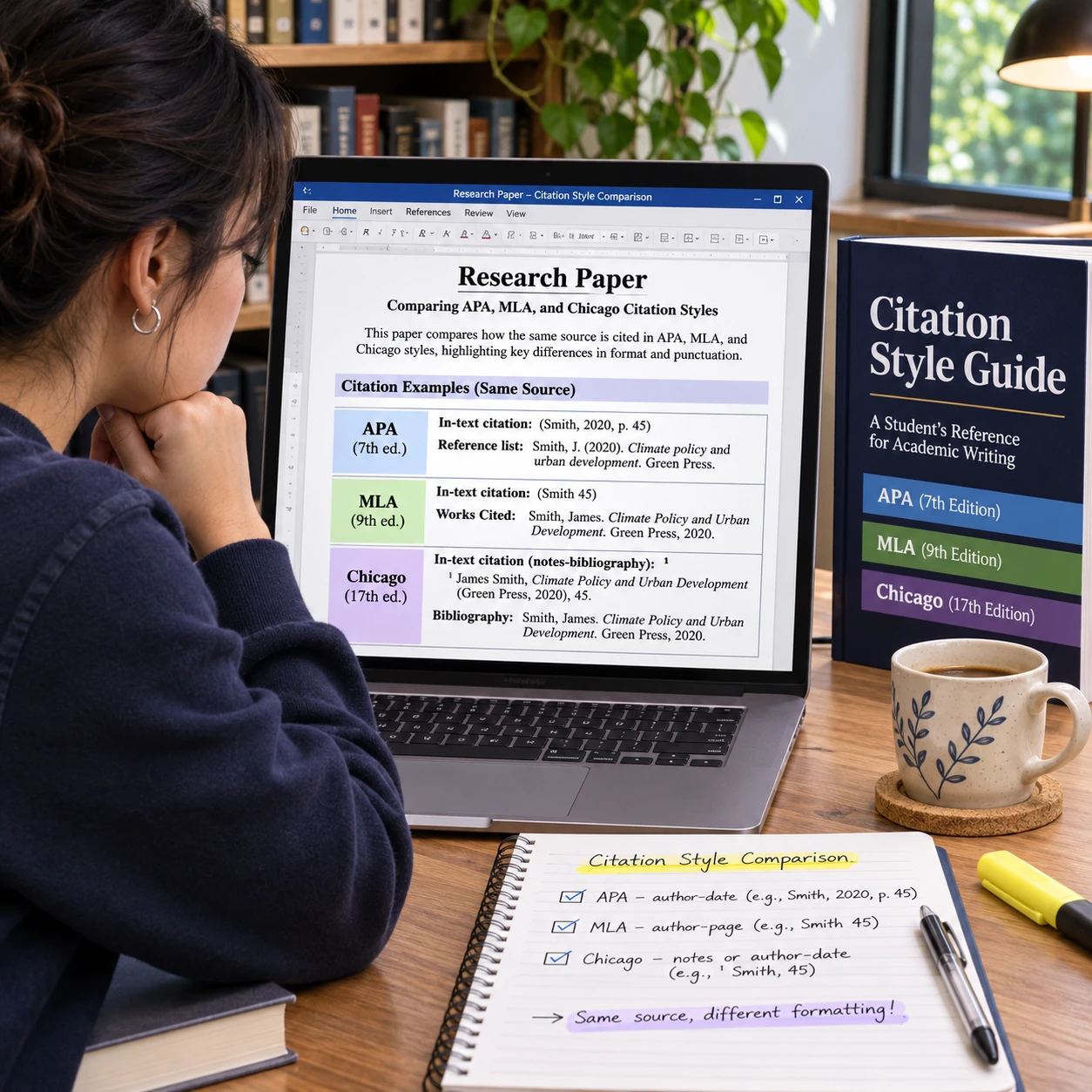
Use citation guides to learn the rules for the required style, such as APA, MLA, or Chicago. Citation generators can create a starting point, but they may misread web pages or omit details. Compare the result with a reliable guide and check your instructor’s preferred edition and formatting rules.
Good research practice also means evaluating sources. Check who created the material, what evidence it uses, when it was published, and whether it directly supports your point. A polished citation cannot make an unreliable source credible, and a reference list does not replace explaining evidence in your essay.
For research-heavy assignments, keep a simple source log with a short note on each item’s main claim and how you might use it. This makes drafting more organized and helps prevent accidental misattribution. Never present copied wording or another person’s argument as your own; quote, paraphrase, and cite accurately.
Build a Simple Writing Improvement Routine
A simple writing improvement routine combines a small amount of practice, targeted learning, tool-assisted editing, and human feedback. Repeating the cycle matters more than using every resource available.
Try this four-step process for each assignment or practice piece:
- Plan: Write down the purpose, audience, main point, and evidence you need.
- Draft: Use a prompt, outline, or course lesson to get a complete first version down.
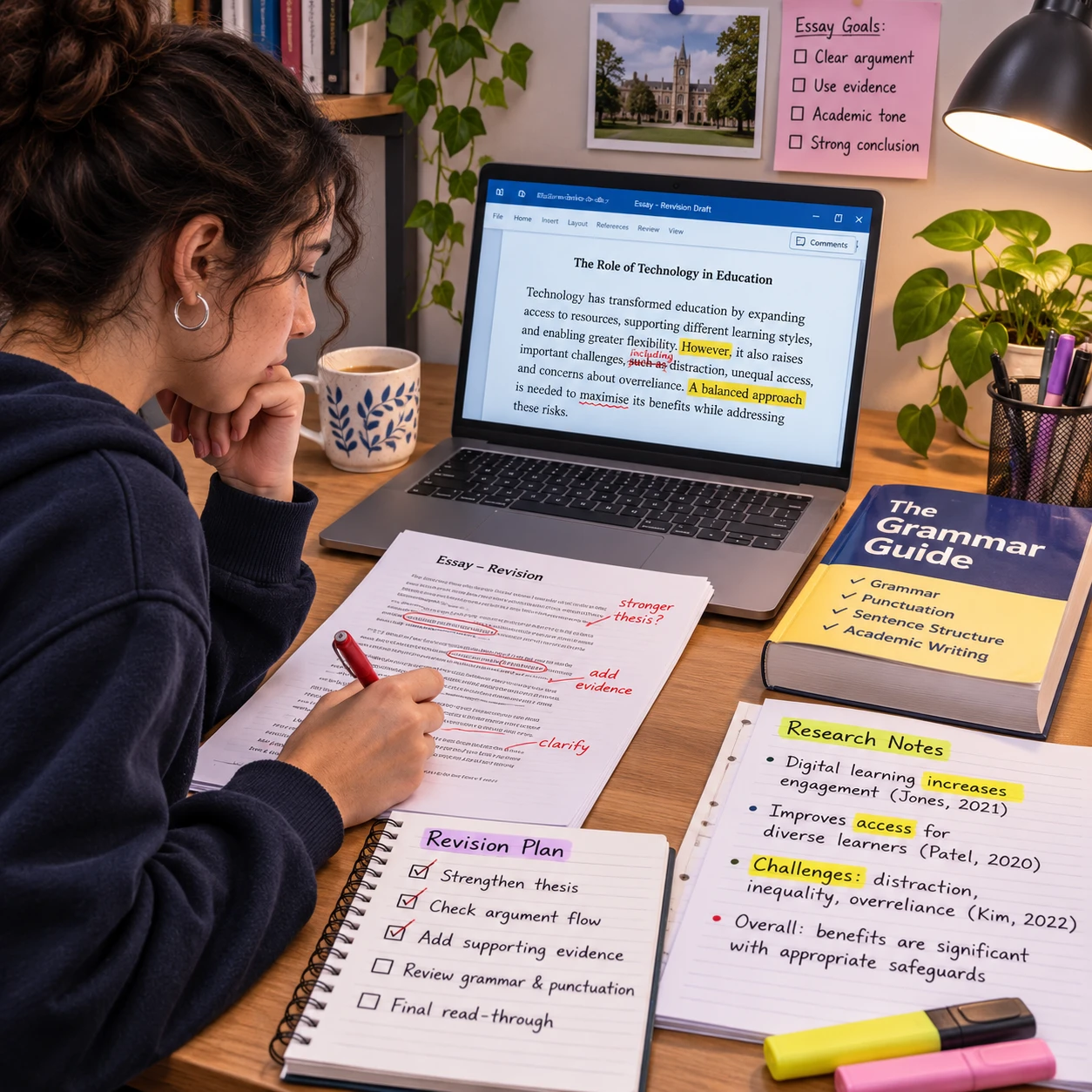
- Review: Read for argument and structure first, then use a grammar or clarity tool for sentence-level checks.
- Revise: Ask a peer one or two focused questions, apply useful feedback, and proofread the final version.
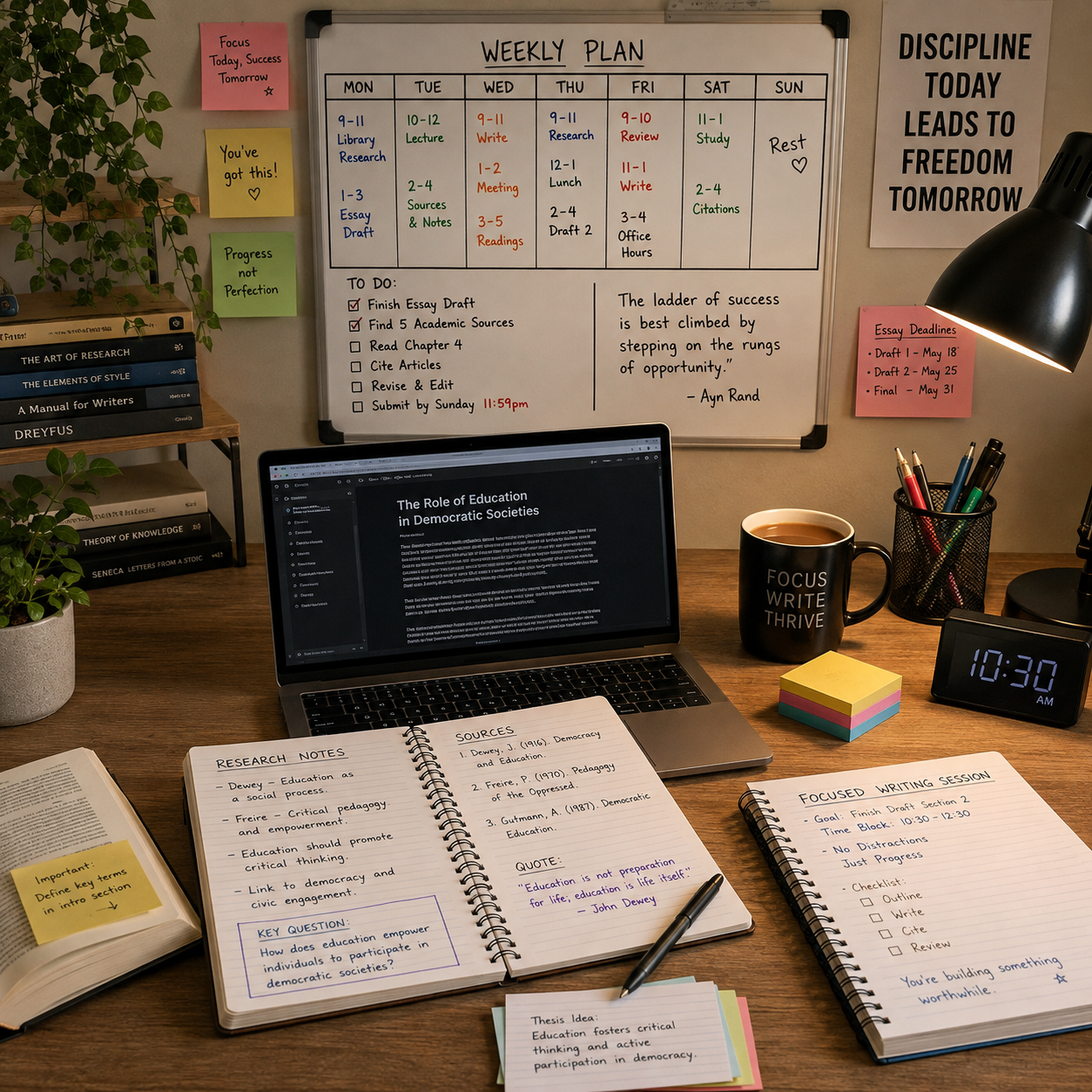
After each cycle, note one strength and one recurring issue. Perhaps your evidence is strong but your paragraphs need clearer topic sentences. Make the next practice session about that specific skill. A short, regular session—even 15 to 20 minutes a few times a week—can be easier to sustain than an occasional marathon.
If you read essay-service reviews, treat them as information about optional support, not a substitute for learning or original work. Review claims carefully, check policies, and follow your institution’s academic-integrity rules. Your strongest long-term resource is a process that helps you understand, write, and revise your own ideas.