Understanding Plagiarism and How to Avoid It in Your Papers
What Is Plagiarism? A Clear Definition for Students
Plagiarism is presenting someone else's words, ideas, or work as your own without proper acknowledgment. It applies to written text, data, images, code, and even spoken content — any intellectual output that originated with someone else.
The concept of original authorship sits at the heart of academic writing. When you submit a paper, the assumption is that the thinking, synthesis, and expression are yours. Borrowing without attribution breaks that assumption, regardless of whether the source is a published journal article, a classmate's essay, or a website.
What trips many students up is that plagiarism is not always a deliberate act. Forgetting to add a citation, copying a phrase while taking notes, or failing to paraphrase adequately can all produce the same result as intentional copying — a plagiarized paper. That's why understanding the full landscape of what counts as plagiarism matters before you write a single word.
Types of Plagiarism: From Obvious to Accidental
Plagiarism exists on a spectrum, and the less obvious forms are often the ones that catch students off guard.
- Direct copying — reproducing text word-for-word without quotation marks or citation. This is the clearest form and the easiest for detection software to catch.
- Mosaic plagiarism — swapping a few words from a source while keeping the original sentence structure and ideas. Even if no single phrase is copied exactly, the intellectual scaffolding still belongs to someone else.
- Patchwriting — stringing together lightly modified passages from multiple sources. It looks like paraphrasing but is really a patchwork of borrowed ideas with minimal original thought.
- Self-plagiarism — resubmitting your own previous work, in whole or in part, for a new assignment without disclosure. Most academic integrity policies treat this as a violation, even though the words are technically yours.
- Accidental plagiarism — missing a citation, misquoting a source, or paraphrasing too closely due to poor note-taking habits rather than any intent to deceive.
Recognizing these categories matters because the prevention strategy differs for each. Intentional copying requires an ethical decision; accidental plagiarism requires better process habits.
Why Plagiarism Matters: Academic and Real-World Consequences
The consequences of plagiarism range from a failed assignment to expulsion — and the damage doesn't always stop at graduation.
Most universities enforce academic integrity policies that carry escalating penalties: a zero on the assignment for a first offense, course failure for a second, and dismissal proceedings for repeat violations. Some institutions maintain permanent records of academic dishonesty that appear in official transcripts or letters of recommendation.
Beyond the classroom, professional fields take original authorship seriously. Journalists lose their jobs over it. Researchers face retraction and career-ending scrutiny. Even in corporate settings, presenting someone else's analysis as your own can constitute fraud. The habits you build as a student — citing sources, paraphrasing carefully, attributing ideas — are the same habits that protect your professional reputation later.
There's also a subtler cost: students who rely on copying instead of engaging with sources miss the actual skill-building that academic writing is designed to provide. That gap shows up later, when original thinking is required and the shortcut is no longer available.
How Plagiarism Detection Tools Work
Plagiarism detection software like Turnitin compares your submitted text against a massive database of academic papers, websites, and published works, then flags sections that match existing content.
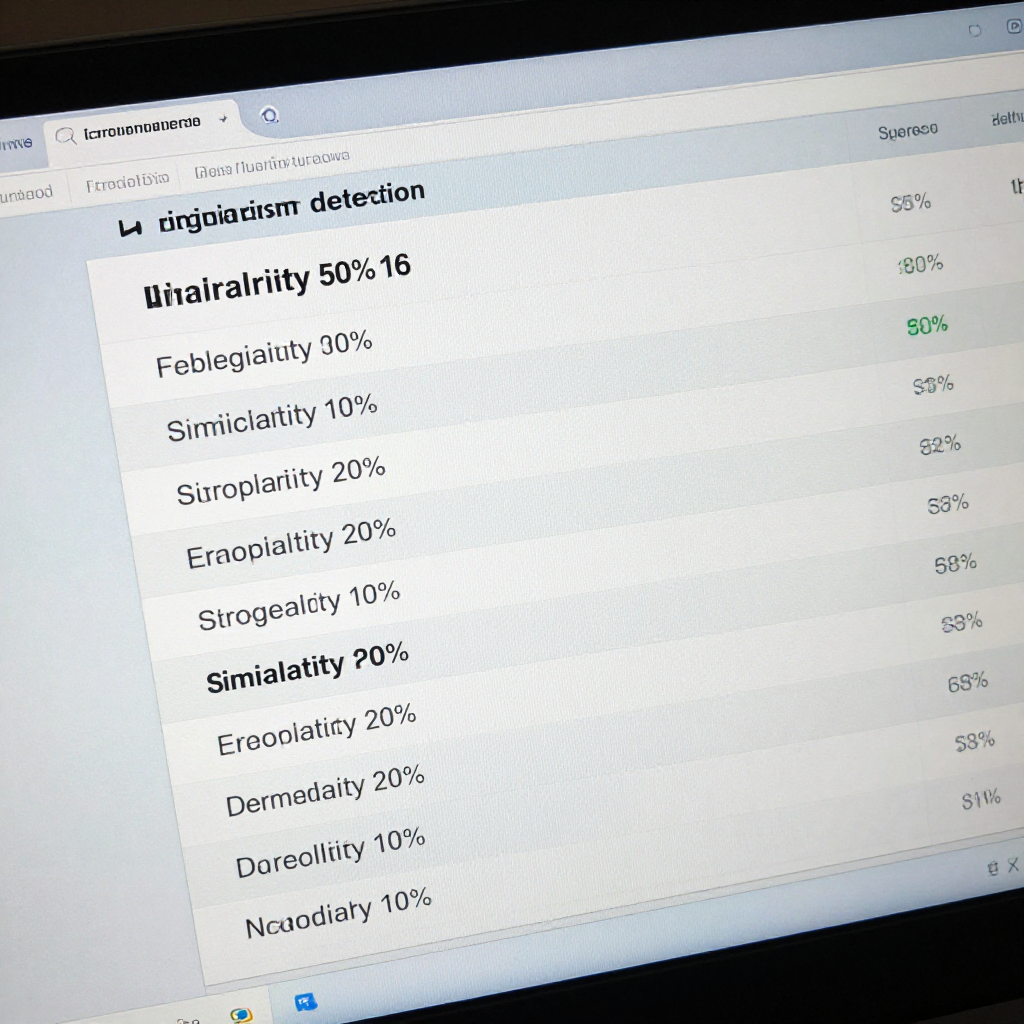
The output is typically a similarity report — a percentage showing how much of your text overlaps with other sources, with color-coded highlights indicating where matches occur. A high percentage doesn't automatically mean plagiarism; properly quoted and cited material will still show as a match. What matters is whether the matched text is correctly attributed.
Tools like Grammarly's plagiarism checker work similarly, scanning against web content in real time. Neither tool is perfect — they can miss paraphrased plagiarism that changes enough words to avoid exact matching, and they sometimes flag common phrases that aren't actually plagiarized. But they're effective enough that submitting copied text and expecting it to go unnoticed is a significant gamble.
One thing students often don't realize: Turnitin retains submitted papers in its database. That means your own previous submissions can be flagged against new ones — which is exactly how self-plagiarism gets detected.
Practical Strategies to Avoid Plagiarism in Your Papers
The most reliable way to avoid plagiarism is to master three core skills: proper quoting, genuine paraphrasing, and consistent citation.
Use Direct Quotation Sparingly and Correctly
A direct quotation reproduces an author's exact words inside quotation marks, followed by a citation. Use this approach when the original phrasing is distinctive or when altering the wording would lose meaning. Quotations should support your argument, not replace your analysis — a paper built mostly from quotes signals that you haven't processed the material yourself.
Paraphrase with Real Engagement
Paraphrasing means restating an idea in your own words and sentence structure, then citing the source. The key word is your own. Reading a passage, closing the source, and writing what you understood from it produces genuine paraphrase. Going line by line and swapping synonyms produces patchwriting — which most detection tools now catch effectively.
Master Citation Styles
Whether your discipline uses APA, MLA, or Chicago style, consistent and accurate citation is non-negotiable. Each format has specific rules for in-text citations, reference lists, and how to handle different source types. If you're unsure which style applies, check your assignment guidelines or ask your instructor before you start writing, not after.
Use Reference Management Tools
Apps like Zotero, Mendeley, and EndNote automate much of the reference management process. They store source details, generate formatted citations, and build bibliographies automatically. Using one from the start of a research project eliminates the frantic citation scramble before submission — and reduces the risk of accidentally uncited sources slipping through.
How Essay Writing Services Fit Into the Picture
Essay writing services occupy a complicated space in academic life, and it's worth being clear-eyed about what they are and how they can be used responsibly.
Legitimate services offer research assistance, editing, structural feedback, and model papers — resources comparable to working with a tutor or writing center. Used this way, they can help a student understand how to approach an argument, structure a literature review, or format citations correctly. That kind of guidance has genuine educational value.
The line gets crossed when a student submits a service-written paper as their own original work without disclosure. That's contract cheating, and it violates academic integrity policies at virtually every institution. Beyond the ethical issue, it's also a practical risk: instructors notice sudden shifts in writing quality, and some institutions now use AI-assisted tools to flag submissions that don't match a student's established voice.
If you're evaluating essay services — which is exactly what review sites like this one help with — look for providers that are transparent about their purpose, offer editing and feedback rather than just finished papers, and don't make promises that sound too good to be true. A service worth using helps you become a better writer, not a more effective cheater.
Building Good Writing Habits for Long-Term Academic Success
The students who rarely worry about plagiarism are usually the ones who've built a reliable writing process — not because they're more ethical, but because their habits make accidental plagiarism structurally unlikely.
Start research early enough to actually read and think about your sources rather than mining them for usable quotes under deadline pressure. Keep annotated notes that distinguish between direct quotes (marked clearly with quotation marks and page numbers) and your own reactions and summaries. This separation prevents the most common source of accidental plagiarism: forgetting which words were yours and which came from the text.
Draft your argument first, then bring in sources to support it. When you write from your own thesis outward, you're synthesizing rather than transcribing. Sources become evidence for your ideas rather than a replacement for them.
Run your draft through a plagiarism checker before submission — not to game the system, but to catch anything you might have missed. A similarity report is useful feedback, not a threat. Treat flagged sections as a prompt to review your citations and paraphrasing, not as a sign that you've failed.
Over time, these habits compound. Citation becomes automatic. Paraphrasing feels natural. The anxiety around plagiarism fades because you're not cutting corners that need to be covered up.
Frequently Asked Questions
What is the difference between paraphrasing and plagiarism?
Paraphrasing restates a source's idea in your own words and sentence structure, followed by a citation. Plagiarism occurs when you restate the idea without attribution, or when your "paraphrase" is so close to the original that it's effectively copied. The citation is what separates the two.
Can I plagiarize myself?
Yes. Submitting work you've already turned in for another course — even if you wrote every word — is considered self-plagiarism under most academic integrity policies. If you want to build on previous work, disclose it to your instructor and get explicit permission first.
Does using an essay writing service count as plagiarism?
It depends entirely on how you use it. Getting feedback, editing, or model examples is generally comparable to tutoring. Submitting a service-written paper as your own original work is contract cheating — a serious academic integrity violation regardless of what the service calls itself.
How do I cite a source I found through another source?
This is called a secondary citation. The correct approach is to locate and read the original source directly, then cite it. If the original is genuinely unavailable, most citation styles allow you to cite it as "quoted in" or "cited in" the secondary source — but this should be a last resort, not a habit.
What percentage of similarity is acceptable in plagiarism checkers?
There's no universal threshold. A 15% similarity score might be fine if all matched text is properly quoted and cited; a 5% score might still flag a problem if the matched section is uncited. Focus on ensuring every matched passage is correctly attributed rather than chasing a specific number.